

Evaluating ERP software is a time-consuming process. Demos, sales calls, and research take weeks, and if you don’t know what questions to ask you could still wind up making the wrong choice for your business.
So before we get into the details, here’s the short version.
The independent researchers at MihaCacic.com evaluated aACE and NetSuite to see which solution performs better for which types of companies. The table below, taken from aACE vs. Oracle NetSuite: A Comparative Report, captures eight key dimensions businesses use to evaluate ERP platforms — and shows exactly where aACE and NetSuite land on each one.
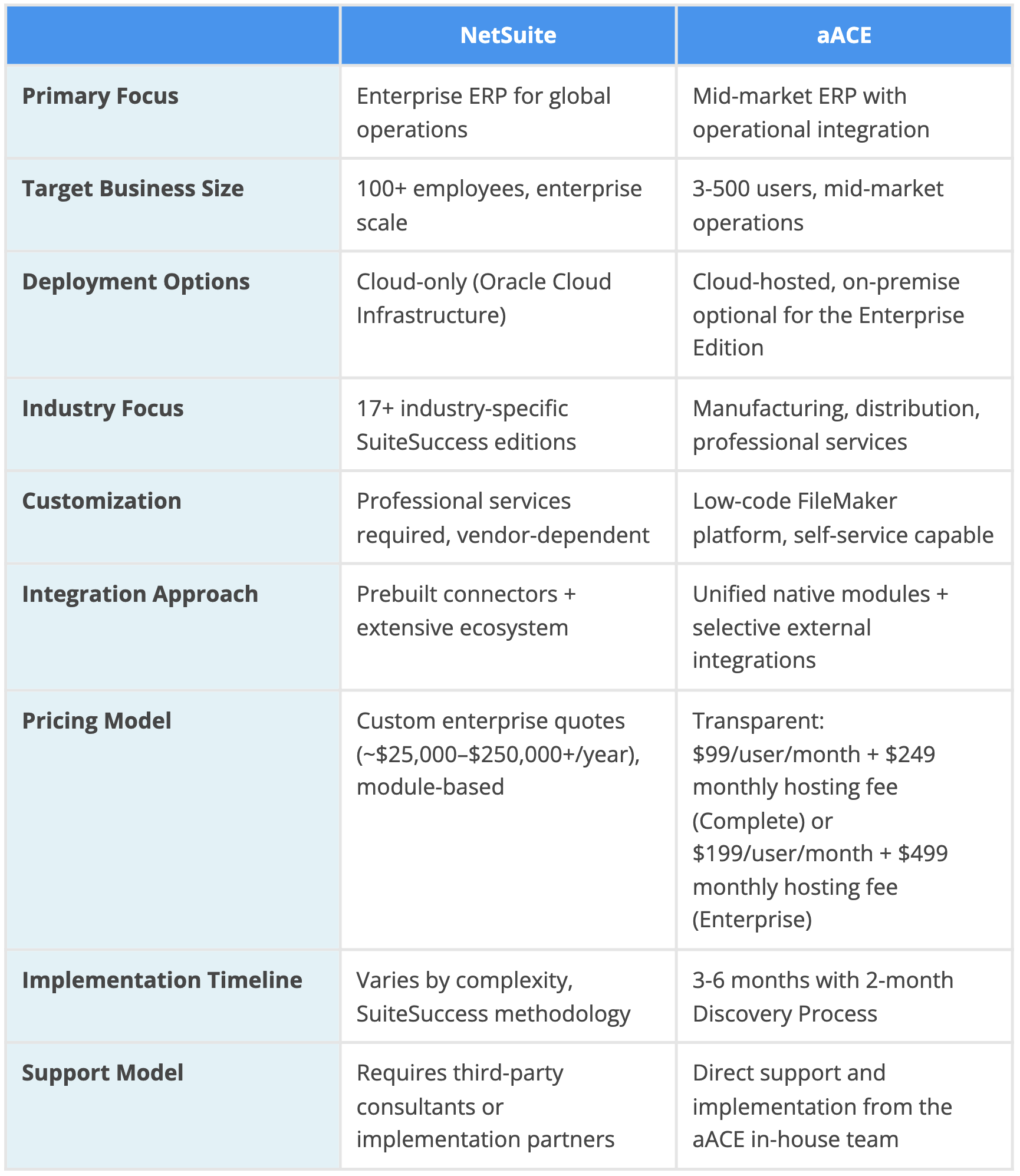
As we examine this table, there are few things worth calling out:
How does aACE pricing compare to NetSuite?
The price difference between the two solutions is significant. NetSuite doesn’t make their pricing publicly available, but their enterprise quotes can range from $25,000 to $250,000+ per year depending on which modules or services your business needs. aACE publishes its pricing openly: $99 or $199 per user per month, with all modules included. For mid-market businesses, that transparency alone can save weeks of back-and-forth with a sales team.
What size business was each solution designed for?
The target business size tells the whole story. NetSuite is built for organizations with 100-1000 employees. aACE is designed for 3–500 users. If you’re in that middle range — too large for QuickBooks, but not yet a multinational corporation — the fit question becomes much clearer.
How does aACE handle implementation and support compared to NetSuite?
Support is another key area where the two solutions differ. NetSuite implementations typically require third-party consultants or certified partners. aACE implementation and support is handled directly by the in-house team that builds the software.
In Conclusion
None of this means one platform is better than the other. It means they’re built for different businesses at different stages. The rest of this report digs into each of these dimensions in detail — but if the chart already told you what you needed to know, reach out to us today to get started.